Find self storage near you and rent online today!
What You Need to Know Before Moving to Washington, D.C.
A New Resident’s Guide to the Nation’s Capital
Washington, D.C. is one of the most walkable, history-dense, and neighborhood-driven cities in the country. Moving here means learning a new rhythm fast: quadrant addresses, a Metro map instead of a highway system, and a skyline defined by monuments instead of skyscrapers. Whether you’re relocating for a job on Capitol Hill, a role at a federal agency, or just a change of scenery, this guide covers the neighborhoods, logistics, food, and sights that will help you feel like a local in no time. And if you’re in the middle of a move, U-Store’s Washington, D.C. location on New York Avenue NE is worth bookmarking before you even unpack your first box.
Table of Contents
I. Getting to Know the D.C. Neighborhoods
II. What You Need to Know Before Settling In
IV. A Few of Our Favorite Restaurants
Getting to Know the D.C. Neighborhoods
D.C. is really a patchwork of small, distinct neighborhoods rather than one big city feel, and picking the right one matters as much as picking the right apartment.
- Georgetown is the oldest and most charming pocket of the city, known for cobblestone streets, the C&O Canal, and upscale shopping along M Street.
- Capitol Hill blends grand government architecture with quiet residential rowhouse streets and the historic Eastern Market.
- Dupont Circle is dense with embassies, bookshops, and outdoor cafés
- Adams Morgan and U Street are the go-to spots for nightlife and some of the city’s most beloved restaurants.
- NoMa and Union Market, just north of Capitol Hill, have become a hub for new apartments, breweries, and food halls.
- Navy Yard along the Anacostia River has grown up around Nationals Park and a lively waterfront.
For a broader overview of what each area offers, Washington.org’s neighborhood guide is a useful starting point when you’re apartment hunting.
What You Need to Know Before Settling In
A few D.C.-specific quirks need to be on your radar as you are learning how to navigate and acclimate to the area.
Addresses are organized by quadrant (NW, NE, SW, SE), radiating out from the Capitol, so always double-check which quadrant a listing is in before assuming you know the area. Housing stock is dominated by older rowhouses and mid-rise apartment buildings, which often means smaller closets, tighter stairwells, and limited storage compared to suburban homes. Street parking is competitive and permit-restricted in most residential neighborhoods, and many commuters rely on Metrorail and Metrobus, run by WMATA, rather than driving.
Because so much D.C. housing is compact, a lot of new residents end up renting a self storage unit to bridge the gap between move-out and move-in dates, store bulky furniture that won’t fit in a rowhouse, or free up closet space for everyday living. U-Store’s self storage tips page is a good resource for packing and moving-day advice, and the storage calculator can help you figure out what size unit you’ll actually need before you rent one.
Things to Do & See Around Washington D.C.
The National Mall and Its Monuments
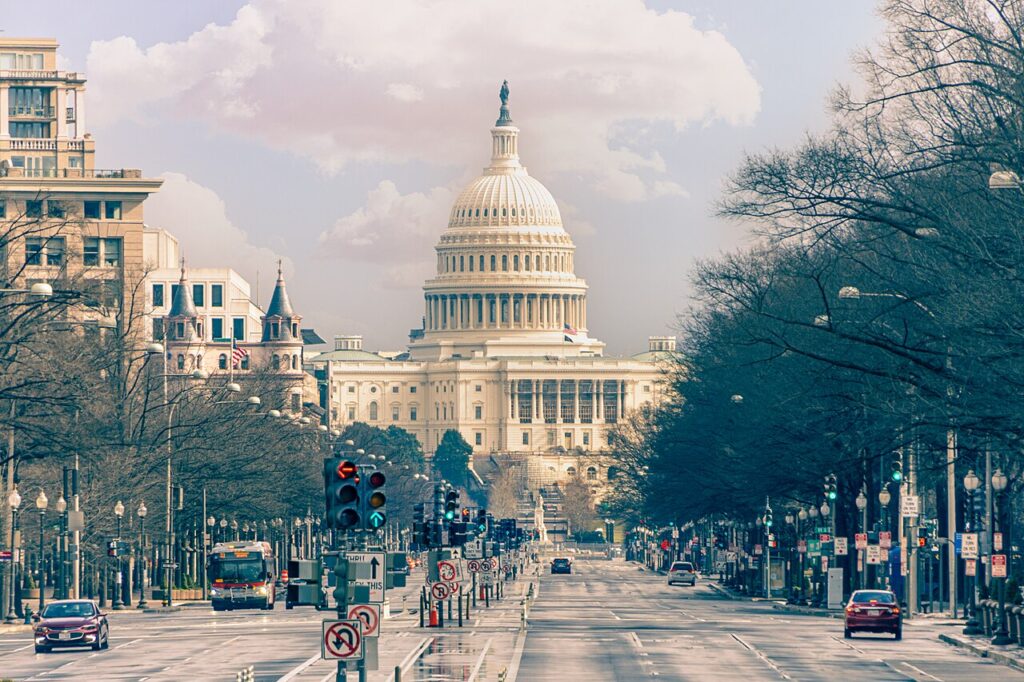
No D.C. guide is complete without the National Mall, the two-mile green corridor between the Capitol and the Lincoln Memorial that anchors nearly every “must-see” list for the city. The National Park Service notes it’s a considerable amount of walking between sites, so wear comfortable shoes and plan for a full day if you want to see it properly.
The Lincoln Memorial is free to visit, with its main chamber and exterior open to the public at all times (a separate undercroft experience requires a ticket). The Washington Monument, the 555-foot obelisk honoring the first president, requires a ticket if you want to ride to the top observation deck. The Thomas Jefferson Memorial sits on the Tidal Basin surrounded by Japanese cherry trees, making it one of the best spots in the city during cherry blossom season. Nearby, the Martin Luther King Jr. Memorial is inscribed with quotes from Dr. King and is officially part of the National Park Service’s African American Civil Rights Network.
World-Class Museums (Most of Them Free)
D.C.’s museum scene is one of the best perks of living here, largely because most of it is free.
The Smithsonian Institution operates 21 museums and the National Zoo, with 11 of those museums sitting right along the National Mall, including the National Museum of Natural History and the National Museum of African American History and Culture. Admission is free everywhere in the system, though a few of the most popular locations require timed-entry passes reserved in advance.
Just off the Mall, the National Gallery of Art is also always free, spanning its West Building, East Building, and outdoor Sculpture Garden. History buffs shouldn’t skip the National Archives Museum, home to the original Declaration of Independence, Constitution, and Bill of Rights. If you’re settling in with kids (or just love animals), the Smithsonian’s National Zoo in Woodley Park is free as well, though it also requires reserving entry passes ahead of your visit.
Capitol Hill
Free guided tours can be booked through the Capitol Visitor Center, which is open Monday through Saturday. A short walk away, Eastern Market has served the Capitol Hill neighborhood for well over a century, with an indoor market running most days of the week and an outdoor arts, crafts, and farmers market on weekends.
Beyond the Monuments: More to Explore
Once you’ve covered the Mall, D.C. has plenty of other areas worth a weekend visit. Georgetown’s waterfront and the C&O Canal towpath are great for a walk or bike ride. Navy Yard has grown into one of the city’s most active riverfront neighborhoods, anchored by Nationals Park. For a break from the city entirely, Rock Creek Park cuts through Northwest D.C. with miles of trails, and it sits right next to the National Zoo, making for an easy combined outing.
A Few of Our Favorite Restaurants in D.C.
D.C.’s food scene extends well beyond power lunches near the Hill, and it’s diverse enough that new residents could eat their way through a different neighborhood every weekend for months. Here are ten spots that capture the range of what the city has to offer, from century-old institutions to newer favorites.
- Ben’s Chili Bowl (U Street) — A D.C. institution since 1958, famous for its half-smokes and chili, and a genuine piece of the city’s civil-rights-era history. It’s the classic first stop for anyone new to the city.
- Old Ebbitt Grill (Downtown) — Washington’s oldest saloon, founded in 1856 and now located near the White House at 15th and F Streets NW. Known for its Victorian décor, raw bar, and an oyster selection that’s been a fixture of D.C. political lore for generations.
- Founding Farmers (Foggy Bottom) — An award-winning, farmer-owned restaurant just three blocks from the White House, serving scratch-made American comfort food for breakfast, lunch, dinner, and weekend brunch since 2008.
- Le Diplomate (14th Street/Logan Circle) — A Parisian brasserie reimagined for D.C., serving classics like onion soup gratinée, moules frites, and steak frites in a bustling dining room with sidewalk café seating.
- Rasika (Penn Quarter) — Modern Indian cuisine from chef Vikram Sunderam, who won the James Beard Award for Best Chef in the Mid-Atlantic. It’s been a fixture on “best of D.C.” lists for well over a decade.
- Rose’s Luxury (Capitol Hill) — A Capitol Hill favorite since 2013, tucked into a rowhouse at 717 8th Street SE, known for playful, ingredient-driven small plates and a lively, communal dining room.
- Maketto (H Street NE) — Part restaurant, part café, part retail shop, this 6,000-square-foot space from chef Erik Bruner-Yang blends Cambodian and Taiwanese street food with fashion and coffee culture in one building.
- Dukem (U Street/Shaw) — A U Street landmark serving Ethiopian food and entertainment since 1997, with a menu of vegetarian and meat dishes meant for sharing and a lively atmosphere for groups.
- Del Mar (The Wharf) — Chef Fabio Trabocchi’s Michelin-recognized celebration of Spanish seafood, overlooking the Potomac River and the Wharf’s marina, with tapas, charcoal-grilled entrées, and a signature paella.
- Martin’s Tavern (Georgetown) — Georgetown’s oldest family-run restaurant, serving upscale American classics and brunch since 1933 under the same family’s ownership for four generations.
If you’d rather graze than commit to one restaurant, Union Market in the NoMa area is a food hall packed with independent vendors and has become a weekend staple for a lot of new residents.
Settling In with U-Store
Moving to a new city is exciting, but it also comes with logistics: overlapping leases, downsizing into a smaller D.C. rowhouse or apartment, or simply needing somewhere to keep seasonal gear you don’t have space for. That’s where a little extra room can make the transition much easier.
U-Store’s Washington, D.C. location at 301 New York Ave NE puts you close to NoMa, Capitol Hill, and the H Street corridor, and it offers both drive-up and indoor units to support a wide range of storage needs. If you’re relocating from elsewhere in the DMV, U-Store also has locations throughout the region to make the transition easier no matter where you’re coming from.
Check current move-in specials and use the storage calculator to find the right unit size for your situation. Look through our self storage FAQ if you have questions before you commit.
Ready to make your move easier? Rent your unit at U-Store Washington, D.C. online today and check one more thing off your moving list.